
Wait Quietly 5: From Unseen, Unloved, Unworthy to Unprotected
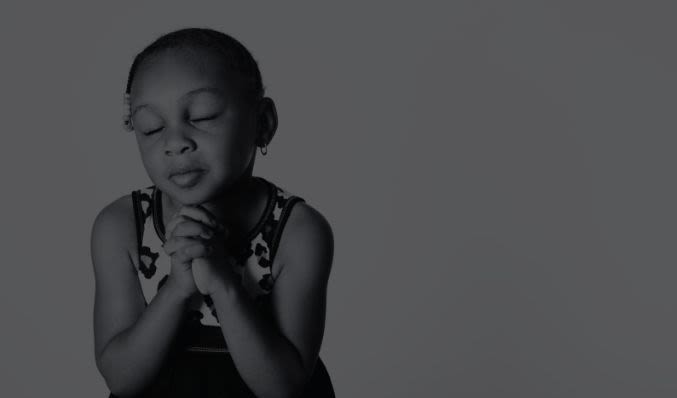

I, Yevette, use god language, theological questions to reflect on my lived experience as a child victim of sexual and domestic abuse who grew up in the Christian church - unseen and unprotected by an omnipotent, omniscient, and omnipresent god. I deliberately use masculine pronouns, he/him, in my writings so that I can stay in the tension of interrogating the power of this mythical male-god and the impact his crafted identity and misappropriated authority have had on me, a child victim who never witnessed him use his power to deliver me.
I was a child, in awe of being alive. I remember spinning around with my friends for no reason, eyes closed, our faces toward the sun, until we fell to the ground - dizzy. I was a child, giggling while sprinting onto the playground after a morning of learning colors, shapes, language, and the joy of music.
I was a child. There was no death; a gentle kiss from a noble prince could reverse that. I had no permanent sense of suffering, only the freedom of innocence and the bliss of ignorance.
I was a prepubescent female being groomed to quietly accept and endure sexual and domestic abuse in a culture of secrecy ordained by religion and the power of the perpetrator. I was six being forced to learn to love myself and love god in a world of violent contradictions. At six I wholeheartedly believed in the idea of a perfect world, a perfect family, a perfect me, a perfect parental love, a perfect divine love, a perfect connection with god, my creator. At six I believed my organic prayers, my wishes wished with eyes closed tightly, fingers intercrossed with a surrendered heart had power, and good behavior could change the world, my world.
At six I believed if I had an innocent, naïve heart, like Snow White or Cinderella, I would be delivered from the obscurity and random suffering of my existence.
I was an innocent victim of aggravated sexual and domestic violence while believing in this god, praying the literal, earnest prayers of a child that was being taught that the prayers of the righteous availed much, but my devotion stopped nothing - nothing. I often think of the songs we sing to god, songs of trust and surrender, songs that teach us to endure and to endure courageously - quietly. For me, as a child victim, the language of trust and surrender before an all powerful god increased my victimization. As a child victim who did not feel loved, I was also being taught that my salvation came from outside myself. As a child, I was learning to be a silent victim before god and man.
When the basic, ontological longing for answers, for love, belonging, safety, provision and deliverance goes unanswered by god, it creates a void in the heart of the child victim. If god does not see me, protect me or provide for me then I must be unworthy of god’s love.
Before this all-powerful god whose character, purpose, power and divine plan could not be questioned, my simple, sloppy, childlike obedience stopped nothing - nothing. I did not know how to reconcile my childlike faith with a god who never showed up. I didn’t know how to please this god, my father, my male creator. My tears stopped nothing - nothing. I felt unseen, unloved, unprotected and unworthy of my creator’s love. How does a child victim thrive when they believe they were created from within the lower recesses of god’s imagination?
Why do adults teach children where to find absolute, miraculous answers when we ourselves are still grieving, bleeding, and pleading for answers from this same god? Struggling to reconcile our own reason for being while standing in the realm of the gray, quietly screaming from within the limitations of our unresolved trauma and dim sight. How do we know this grief, this deep ontological questioning, and still fashion our mouths to tell children to believe, trust, pray to and obey a god who we know does not always show up as he does in the biblical text? At six, as I waited for this god, as I waited for my miracle, my beautiful but battered mother slept and snored, tossing and turning, fighting for her own rest under the intense weight of her own story and the epigenetic legacy of sexual and domestic violence that laced her DNA, I waited quietly, patiently, in the dark.
With a heavy heart I waited for her.
I waited for god.
I waited for god while holding my uncle’s soiled hand.
With a questioning heart I waited for her.
I waited for god while holding her husband’s semen-soiled hand.
With an angry heart I waited for her.
I waited for this all-powerful god while holding my brother’s semen-soiled hand.
I waited, quietly.
I remember standing in the corner of my bedroom, behind the door, a wedge of light illuminating my bedroom floor, the dust and the silhouette of whatever toys I hadn’t put away. I would often glance between the lace of my nightgown, our hands, my tiny feet and the static sweat glistening on their brows while their anxious eyes searched the hall for any movement or any potential witnesses to their sexual crimes. Many nights I stood there weeping, too afraid to cry out; silently pleading in the dark to a god, an image, a divine idea that was anchored in the stories and sentiment of a historical text, but unmoved by how child victims cried out under the weight of their perpetrators.
As a little girl, Sunday after Sunday, bruises covered, the night’s residue rinsed away, soiled nightgown secretly tossed in the bin, I joyfully skipped down church hallways, running towards the food, crafts, and the stories of god’s love for me and his ability to keep me safe. Sunday after Sunday, Wednesday after Wednesday, I went home with an arsenal of assignments based on scriptural promises that went unanswered. I remember consistently giving god excuses, using my imagination to create reasons for his absence. I remember coloring pictures of the parting of the Red Sea, arks, rainbows, and Jonah safe and dry next to a fat happy whale. I remember looking at pictures of children holding the hands of Jesus as he walked and talked with them, each of them pristine in their appearance with no signs of fear or neglect. Everything about this god and his kingdom was perfect and I was not. I was trying to please him, but I could not. As a child victim of sexual and domestic abuse, this posture of pleasing from a place of ontological grief and questioning would be my undoing.
In some cultures, we, as parents, will spend the entire year using the myth of Santa Claus to fashion our children’s beliefs and behaviors, but for god, we will let divine promises linger around promises, unsubstantiated myths, forced doctrine, and our own unresolved issues, and this is dangerous for child victims. This is especially dangerous within a culture of religious supremacy and cultural secrecy.
Telling any child, especially a child victim of sexual and domestic abuse that god will deliver them from all their troubles is not realistic or fair; it’s detrimental and to be honest, it’s cruel. From within the limited lens of my lived experience, I would say it is cruel to offer these miraculous stories, and a god of absolute knowledge, hope and power, especially to the child who may be experiencing abuse. With the simplicity of a child’s heart, I was a believer. I was really waiting on god to save me. With a child’s gentle heart and expansive imagination that does not question its inspiration, I waited on the character of this god to show up – much like I waited on Santa Clause to respond to my mother’s reports, my good behaviors, and earnest prayers.
This silly, commercialistic and shallow nature of our world made parents cover for Santa, but not god. I got gifts from Santa Claus, but no deliverance from god.
I believed that I was unloved, undesigned, and unwanted by Him – by god, and because of the abuse, I believed I was despised by Him as well. What Father, biological or otherwise, leaves his daughter to be sexually and physically abused and does not use every resource available to him to protect and deliver her?
If god did not deliver me, I was undeliverable.
If god did not love me, I was unlovable.
I now know that at six, when the sexual and domestic abuse began, I was quietly grieving before god, and this grief, this questioning of why I even existed has led to a very difficult life for me. I remember asking why god wasn’t protecting me, and then I thought perhaps he didn’t see me, and that he didn’t see me because I wasn’t worthy to be seen – to be loved. (Read my memoir here). When we present to our children a god who is omnipotent, omniscient, and omnipresent and then share stories with them that they too can know the miraculous nature of this god if they believe, trust, pray and obey and yet the child continues to suffer abuse, it creates a cosmic parental wound. I was being told to believe in promises that were never fulfilled and it caused me to believe I was unloved by god. Why else would he withhold his power and presence when he saw what I was enduring?
Isn’t there a scripture that says he would catch our tears?
I am unsure how to write this last installment of Wait Quietly. I have been struggling for months to interrogate and build out this substantial title because it has been like excavating the trauma of my life and my relationship with god, along with the appropriate language to honor the unpacking of these many layers of these new, personal, and deeply spiritual revelations. Comparisons are always dangerous. I was being fed a false hope about the nature of god, a nature that was not sustainable in this world of shadows where god does not always deliver and justice is often an illusion. I was being taught to trust in the character or identity of a god who would protect and deliver the innocent, and when he didn’t protect and deliver me, I assumed I was unseen and unworthy of his love. I was being taught that god loved me as his daughter and that if I believed, prayed and behaved that I would know this love and I would see him deliver me from my abusers, but it never happened.
I believed, as a child victim, that I wasn’t wanted - that god, for some reason, despised me and abandoned me to be abused, violated, and neglected. Who else was to blame? As a child victim of sexual and domestic abuse who eventually became a sex-worker, someone sexually exploited and trafficked by others, I’ve come to understand my victimization begins with this cosmic parental wound.
Every day, every morning, I still ask god if he created me on purpose, if he loves me, sees me, or deems me worthy of his love.
Authored by: Yevette Christy
To connect with Yevette, email her at vette@yevettechristy.com




Published by SurvivorSpace, a program of Zero Abuse Project
 Built with Shorthand